
School readiness usually gets measured by whatever is easiest to see, which means letters, counting, and a name written across the top of a page with the letters leaning in all directions. Those are the things that end up in the fridge, so those are the things parents tend to watch.
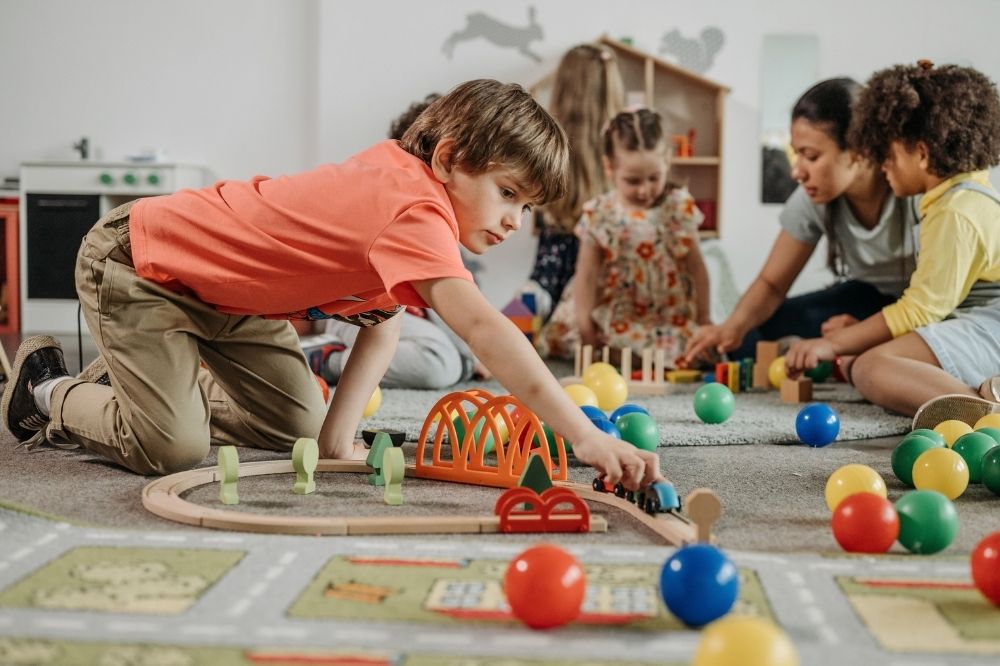
A lot of what shapes a child’s first year of school grows somewhere less visible. It grows in play, in conversation, and in ordinary days spent with other children.
School Readiness Begins Long Before the First Worksheet
Think about the first week of school. There are routines everyone else seems to know already, instructions given to the whole group rather than to your child, and far more children than adults in the room. Your child has to find their own name on a hook, sit still on the carpet, and say out loud that they need the bathroom to a grown-up they only met on Monday.
Very little of that is academic, but a lot of it shapes whether a child comes home worn out or happy.
The skills that carry them through are quieter ones. Holding a plan in mind long enough to finish it. Asking an unfamiliar adult for help. Waiting through a turn, and following a second instruction before the first one is done. These build slowly through practice rather than through being taught, which is why a child who has had time with them arrives at school with more to draw on.
Everyday Play Teaches What Drills Often Miss
That time mostly happens during play, and it looks like nothing much from the outside.
Two children want the same shovel, and what happens next is a small piece of real work. They talk it out, read each other’s faces, make an offer, hear a no, and often enough end up friends again a few minutes later. Very little of that comes from a printable.
Spending regular time with the same group of children is what gives those moments somewhere to go, because it lets a child have a second try at making up after a fight, and then a third.
Setbacks Are Part of the Learning
Sooner or later the tower falls over, or the paint runs and the picture is spoiled. Small failures in places where nothing much is at stake are how children learn to recover, and that is hard to practice in the abstract, because something has to actually go wrong first.
What matters is not whether a child gets upset, because many will, and a ruined painting is a fair reason to be. What matters is how long it takes them to come back to the table. Adults who hold off on fixing it straight away, and instead stay nearby and wait, leave room for a child to find their own way back.
Some Places Treat These Years as a Stage of Their Own
Because these skills take time, some education systems set aside a formal stage for them before school begins, usually with its own aims and its own trained staff. Australia is a useful example, partly because the name it uses causes so much confusion.
In New South Wales and the Australian Capital Territory, kindergarten is the first year of primary school. In Victoria, it means the play-based years that come before school starts. So a child in Victoria can be attending kindergarten with their first day of school still ahead of them, which is worth knowing before comparing anything across borders.
What a Planned Play-Based Program Looks Like
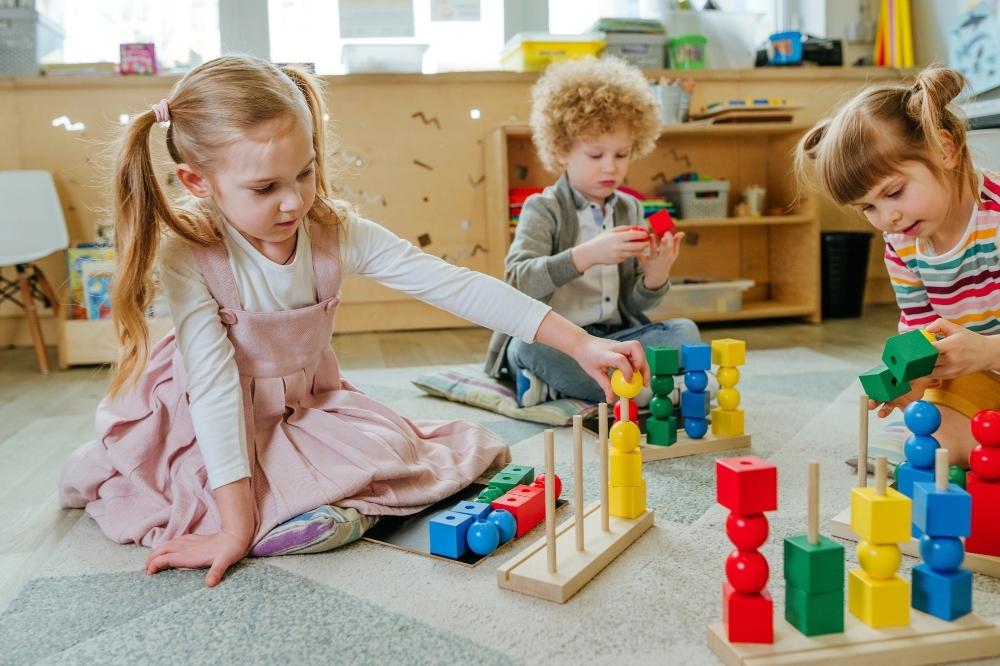
Programs across Australia follow a shared set of national guidelines, which Victoria delivers through its own aligned version, and services are assessed and given a public quality rating under a national system called the National Quality Framework. What that means day to day is that the play is planned rather than accidental. An educator who puts out lengths of guttering, a crate of pinecones and a few buckets of water has already thought about what that mix will ask of the children who find it. In Victoria, any kindergarten program that receives government funding has to be led by a teacher qualified in early childhood education.
Victoria funds kindergarten for the two years before school, and families can find those programs in two places. Some run at a standalone kindergarten, which opens for a few hours on set days. Others run inside a long day care center, where the same teacher-led program sits within a full day of care. The state puts it plainly: kinder is a program, not a place.
None of that is limited to the big cities. A kindergarten in Shepparton, a regional city about two hours north of Melbourne, is held to the same requirement for a qualified early childhood teacher, and assessed under the same national system, as one in an inner suburb. Where a service sits on the map does not change the standard its program is measured against.
That is worth knowing wherever you live, if only as a question to ask locally. Who is qualified here, and what are they planning for?
Confidence Is the Skill That Carries the Others
A child who will try something new, be wrong in front of other people, and ask the question anyway has more of what they know available to them in a classroom. Play builds that slowly, because getting it wrong costs almost nothing and another go comes around within the minute.
The name tends to come in its own time, and you will probably barely notice the week it happens. Watching for those quieter skills alongside the visible ones is what school readiness really looks like: curiosity, resilience, and a child who is willing to have a go.
