
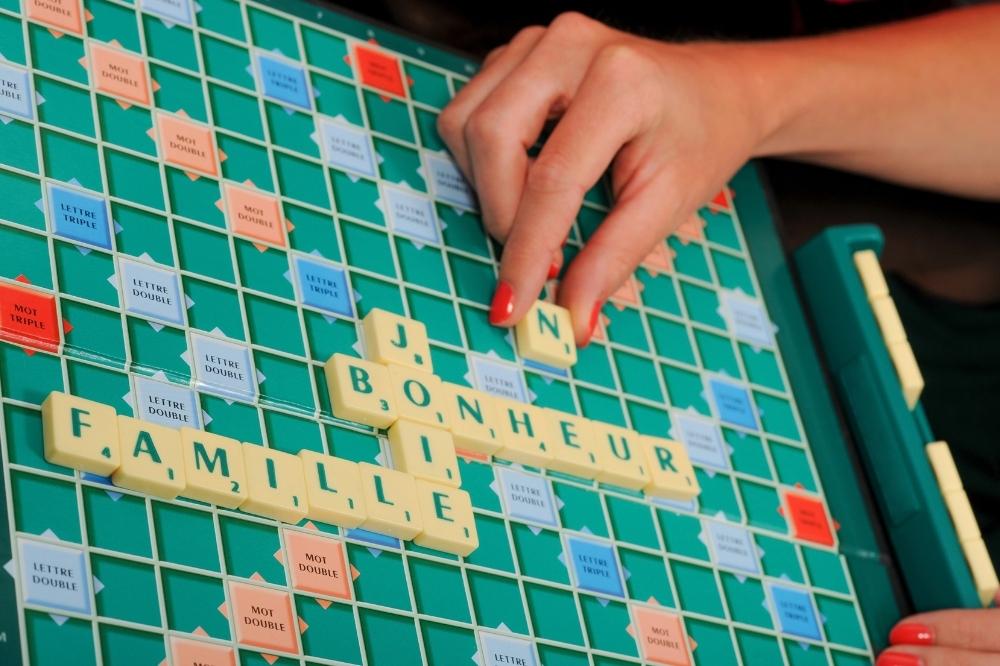
To master Scrabble to win every game, study vocabulary and board strategy. High-level players focus on letter distribution and probability to gain a competitive edge. Every move requires a balance between offensive scoring and defensive positioning. Successful competitors utilize rare consonants and vowel-heavy racks to maximize point efficiency. Mastery involves internalizing complex patterns and board geography to unscramble every word available on the rack.
To master Scrabble and win every game, follow the eight steps listed below.
- Memorize high-value words. Study lists of terms containing Q, Z, J, and X to capitalize on the high-scoring tiles. Letters provide significant boosts when placed on bonus squares.
- Learn two-letter words. Master the full list of short terms to enable parallel plays and tight board navigation. Small words facilitate connecting larger terms across multiple lines simultaneously.
- Control premium squares. Occupy triple word and double word spots before opponents take advantage of the bonus. Denying access to these locations prevents the other player from achieving massive score spikes.
- Track remaining tiles. Keep a mental tally of which letters remain in the bag as the game progresses. Knowing the probability of drawing a specific vowel or consonant informs risk management.
- Use blank tiles strategically. Reserve the versatile blank pieces for seven-letter bingos or massive point gains. Playing a blank for a low-scoring word wastes its big tactical potential.
- Maximize rack balance. Aim for a mix of four consonants and three vowels to maintain flexibility for future turns. Overcrowding the rack with identical letters limits the ability to form diverse words.
- Plan multiple turns ahead. Analyze the board for future openings and potential extensions of existing words. Anticipating opponent responses allows for better long-term board control.
- Optimize endgame scoring. Empty the rack quickly once the bag is empty to avoid point deductions. Capturing the remaining values from an opponent’s rack determines the final winner.
1. Memorize High-Value Words
Memorizing high-point letters (Z and Q) requires specific word knowledge because they lack common connections. Players who memorize “za” or “qi” consistently outperform players who wait for a U or an A. For example, playing the word “quartzy” to utilize high point letters on a single turn. Placing the word “pyx” on a triple letter square to gain twenty-one points from three tiles is another example. Memorizing specific letter combinations transforms a difficult rack into a major advantage.
2. Learn Two-Letter Words
Learn two-letter words allows for “hooking” onto existing tiles to create multiple words in a single move. The technique maximizes the value of every letter by counting them twice in different directions. For example, placing “jo” parallel to another word to create three distinct two-letter combinations. Using “xi” to utilize the X tile effectively when board space is limited is another example. Mastery of the short terms provides more options for placement during every turn.
3. Control Premium Squares
Control premium squares involves occupying and blocking the most valuable coordinates. The strategy prevents opponents from reaching triple word scores that flip the game lead. For example, playing a long word that ends just before a triple word square to block access. Placing a low-value tile (S) on a double word score to deny the opponent a larger bonus is another example. Strategic placement keeps the game score within reach even when drawing poor letters.
4. Track Remaining Tiles
Tracking remaining tiles helps determine whether to save a high-value letter for a specific opening. High-level play relies on the certainty of which letters remain unplayed during the final rounds. For example, realizing only one E remains in the bag and playing conservatively to keep a balanced rack. Deducing the opponent holds the Q and closing off all open U spots on the board is another example. Calculation of remaining tiles reduces the element of luck in competitive matches.
5. Use Blank Tiles Strategically
Use blank tiles to provide the most value when creating fifty-point bingo bonuses. Blank tiles fulfill their potential when forming words worth at least twenty-five points. For example, holding a blank until it completes a seven-letter word like “retinas”. Using a blank as a Z to hit a triple word score when no other Z is available is another example. Blanks provide the flexibility needed to overcome a rack full of difficult consonants.
6. Maximize Rack Balance
Maximize rack balance. Maintaining a healthy ratio of vowels and consonants ensures a player never gets stuck with unplayable letters. Trading tiles is a valid strategy when the rack becomes lopsided with too many duplicates. For example, playing off three vowels in one turn to fish for more consonants. Keeping the common letters R, S, T, L, N, and E to increase bingo chances is another example. Proper rack management leads to more consistent scoring across every round of the game.
7. Plan Multiple Turns Ahead
Plan multiple turns ahead. Victory requires looking at the board as a developing landscape rather than a series of isolated moves. Players identify hot spots and work toward opening or closing them based on the current score. For example, playing a word that sets up a future hook for a high-scoring letter. Intentionally leaving a spot open for a later play involving the letter J is another example. Long-term vision separates casual players from experts who dominate the board.
8. Optimize Endgame Scoring
Optimize endgame scoring. The final phase of the match demands a shift from high-scoring words to efficient tile depletion. Reducing the value of tiles held at the end minimizes the penalty subtracted from the total. For example, playing off the letter V or W as soon as the bag is empty. Blocking the opponent’s only possible move to force a pass and end the game is another example. Speed in emptying the rack determines the winner in close competitions.
Best Scrabble Tips
Best Scrabble Tips are listed below.
- Learn and use two-letter words: Small words provide the foundation for advanced board navigation and parallel scoring. Mastering the short terms allows players to squeeze points out of tight spaces where longer words cannot fit.
- Play defensively by blocking premium squares: Preventing an opponent from hitting a triple word score is just as important as scoring one. Placing tiles near high-value spots without opening them up limits the scoring potential of the other player.
- Balance the rack with vowels and consonants: A rack with too many of one type of letter restricts word formation possibilities. Swapping tiles or playing specific combinations helps maintain a flexible and productive letter set.
- Save blank tiles for high-scoring plays: Blank pieces are the most versatile tiles and facilitate the fifty-point bingo bonus. Using them for simple words is a common mistake that reduces the scoring ceiling for the match.
1. Learn and Use Two-Letter Words
Learn and use two-letter words. Mastery of the 107 acceptable two-letter combinations enables the parallel play technique. The strategy involves placing a word right next to another word so that every letter forms a new vertical or horizontal connection. Points accumulate rapidly as multiple words score in a single turn. For example, placing “ax” alongside “be” to form “ab” and “xe”. Knowing the two letter scrabble words is the fastest way to increase average game scores.
2. Play Defensively by Blocking Premium Squares
Play defensively by blocking premium squares. Successful defense involves recognizing when a word opening benefits the opponent more than the current player. Creating a closed board prevents high-scoring bingos and keeps the point spread manageable. For example, avoiding the placement of a vowel next to a triple letter square. Playing a short word in a way that occupies the fourth letter spot of a potential triple word extension is another example. Players prioritize board control over individual high-point words in specific scenarios.
3. Balance the Rack with Vowels and Consonants
Balance the rack with vowels and consonants. The concept of rack leave dictates which letters a player keeps for the next turn to ensure future success. High-level competitors prefer holding onto versatile letters (N, E, and S) while shedding bulky consonants. For example, playing “viva” to remove two V tiles despite the low point value. Keeping an “ing” or “ed” suffix to make a seven-letter word easier to find is another example. Maintaining a balanced rack provides more opportunities to score across the entire board.
4. Save Blank Tiles for High Scoring Plays
Save blank tiles for high-scoring plays. Blanks are the keys to unlocking the board when difficult letters clutter the rack. They act as the missing link for long words that cross multiple multiplier squares. For example, using a blank to reach an inaccessible triple word score. Saving the blank for the final turns to ensure the rack empties completely is another example. Strategic use of these zero-point tiles leads to the highest-scoring plays in the game.
How to Play Scrabble?

To play Scrabble, follow the five steps listed below.
- Set up the board. Set up involves placing the game board on a flat surface and ensuring all one hundred tiles are inside the opaque bag. Each player draws one tile to determine the starting order based on alphabetical proximity to A.
- Draw initial tiles. Players pull seven random letters from the bag and place them on their personal rack. Keeping the letters hidden prevents opponents from anticipating future moves.
- Form a first word. The initial player creates a word using at least two tiles and places it on the center star square. The opening move receives a double word score bonus automatically.
- Continue clockwise turns. Participants add letters to the existing grid by connecting new words to tiles already on the board. All words formed must be valid according to the agreed-upon Scrabble Game Rules.
- Refill the rack. Players draw new tiles from the bag at the end of every turn to return the rack count to seven. The process continues until the bag is empty or the game reaches its conclusion.
