
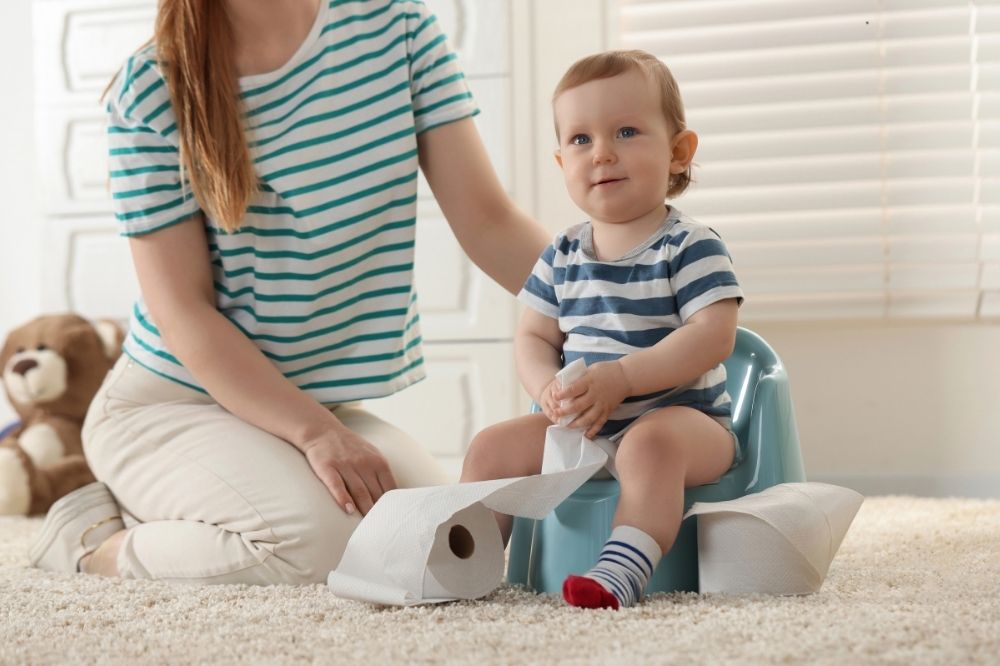
Daytime potty training gets all the attention. Night-time dryness is a different process, it happens on a different timetable, and the advice that worked for the day mostly doesn’t apply. Parents who try to train it the same way, with rewards and reminders and lifting at 11pm, tend to end up frustrated, because night-time dryness isn’t a skill a child learns so much as a developmental stage they reach. Knowing that changes the approach entirely.
Why Nights Are Different
Staying dry overnight depends on two things the child can’t control: the bladder being able to hold a night’s worth of urine, and the brain producing enough of the hormone that reduces urine production during sleep. Both develop on their own schedule. Some children are dry at night within weeks of being dry by day. Many aren’t dry until four or five, and a significant number, around one in five five-year-olds, are still wet at night. Under the age of five, bedwetting isn’t considered a medical issue at all.
That’s the reassuring part. It’s also why night-time training can’t be forced. What parents can do is notice readiness, set things up so that it’s easy, and manage the wet nights until it happens.
The Signs Of Readiness
A nappy that’s dry, or nearly dry, in the morning for several days running is the main one. A child who wakes and asks to use the toilet at night, or who’s bothered by a wet nappy, is another. Reliable daytime dryness for a few months is a prerequisite. If none of these are present, it’s not time, and there’s no benefit in trying.
Once they are, the move is straightforward: nappy off at night, pants on, and see what happens. Some children are dry from the first night. Most have accidents for a while, and the job is to make those accidents as low-drama as possible.
Setting Up The Bed
This is the part that makes the difference between a manageable few weeks and a miserable few months. A waterproof mattress protector under the sheet is essential; two, so one’s always clean. Over the protector, some parents layer a second fitted sheet with another protector on top, so that a 3am change is a matter of pulling off the top layer rather than remaking the bed. A spare set of pyjamas and a towel on the chair.
The bedding itself should be simple and washable. Cotton, in a weight that dries fast, with duvet covers that come off easily; the comfortable bedroom textiles that suit a child’s room in this phase are the plain, robust ones that survive a 60-degree wash twice a week. Anything decorative, dry-clean or heavy goes in the cupboard until the phase is over. A night light on the route to the toilet, a potty in the room for the first weeks, and a child who knows they can call.
The Routine That Helps
Plenty of drinks through the day, so the bladder learns to hold a reasonable volume, and less in the last hour before bed. A toilet trip as the very last thing, after teeth and stories. No lifting: carrying a sleeping child to the toilet at 11pm keeps the bed dry but teaches nothing, and most specialists advise against it. Praise for dry nights, matter-of-factness about wet ones, and no rewards or charts, which only add pressure to something the child doesn’t control.
Handling The Wet Nights
Calm, quick and boring. Child up, wet things off, quick wipe, clean pyjamas, top layer of bedding off, back into bed. Minimal light, minimal talk. It should take under five minutes and it should feel like nothing has happened, because from the child’s point of view nothing has: they were asleep.
Never a telling-off. A child who’s punished or shamed for wetting the bed wets it for longer. If the wet nights are every night for more than a couple of weeks, the nappy can go back on without any sense of failure, and the attempt made again in a month or two.
When To Get Advice
Bedwetting under five needs no medical input. From five, if it’s still frequent, a GP or school nurse can help; there are simple approaches, including bedwetting alarms, that work well once a child’s old enough to respond to them. A child who was reliably dry and starts wetting again, or who has daytime accidents, pain or unusual thirst, should be seen sooner, because those can point to something else.
The Older Child

For a six- or seven-year-old still wet at night, the practical measures matter more: protectors, easy bedding, a routine, and a straightforward conversation that this is common and will pass. Sleepovers are the pressure point, and disposable pants that look like ordinary underwear exist for exactly this. Most children are dry by the time they’d be embarrassed; the ones who aren’t need matter-of-fact support, not a plan.
The Bottom Line
Night-time dryness arrives when the body’s ready, not when the chart says. Watch for dry mornings, set the bed up so accidents are a two-minute job, keep the routine simple and the response calm, and don’t lift. If it isn’t working, go back to nappies and try again later. Under five, there’s nothing to fix. Over five, there’s help, and it works.
