
The gymnasium fills fast. Sneakers squeak across the floor in overlapping rhythms, voices stack on top of each other, and a color team banner unfurls near the far wall. A loud whistle cuts through the noise, shifting the whole room immediately.
Kids drifting at the edges move toward the center because a shared sense of belonging pulls them in, creating an environment adults actively shape through structured team experiences before the first game even begins.
Team activities for kids do more than burn energy. They build communication, empathy, and resilience alongside physical skill. Sports participation connects children to their peers and adults, creating a lasting social foundation.
Connecting a group quickly often relies on shared visual cues, because when participants wear coordinated apparel, they instantly recognize their place in the collective. Finding accessible gear, like Sports Gear Swag’s cheerleading uniforms for kids, gives every member a tangible symbol of their inclusion. The difference between a child who leans in and one who stays on the edge comes down to intentional choices adults make about the group.
1. Get Kids Moving Together
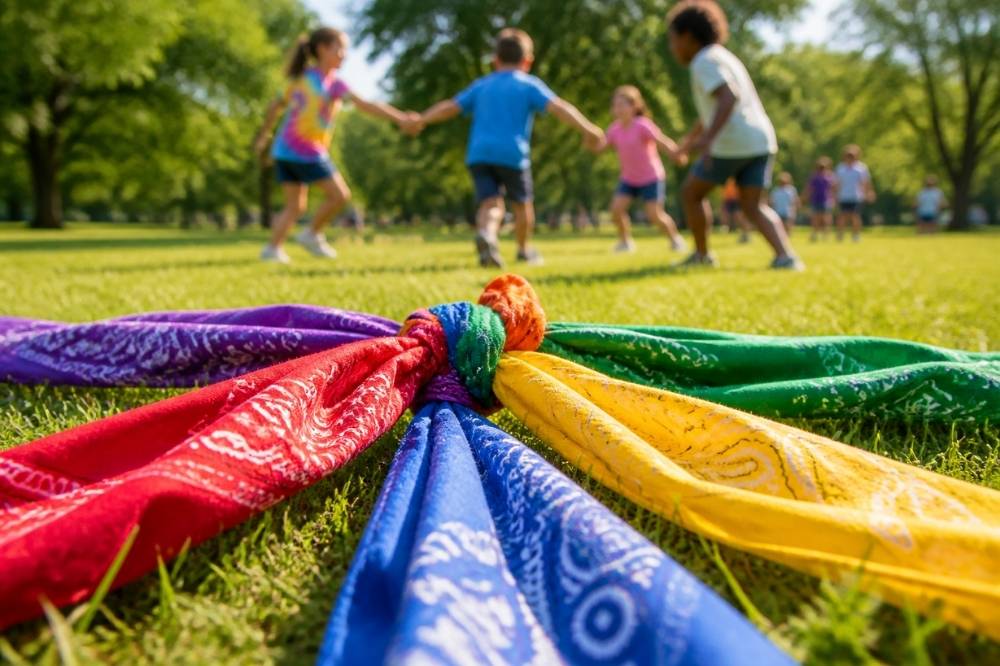
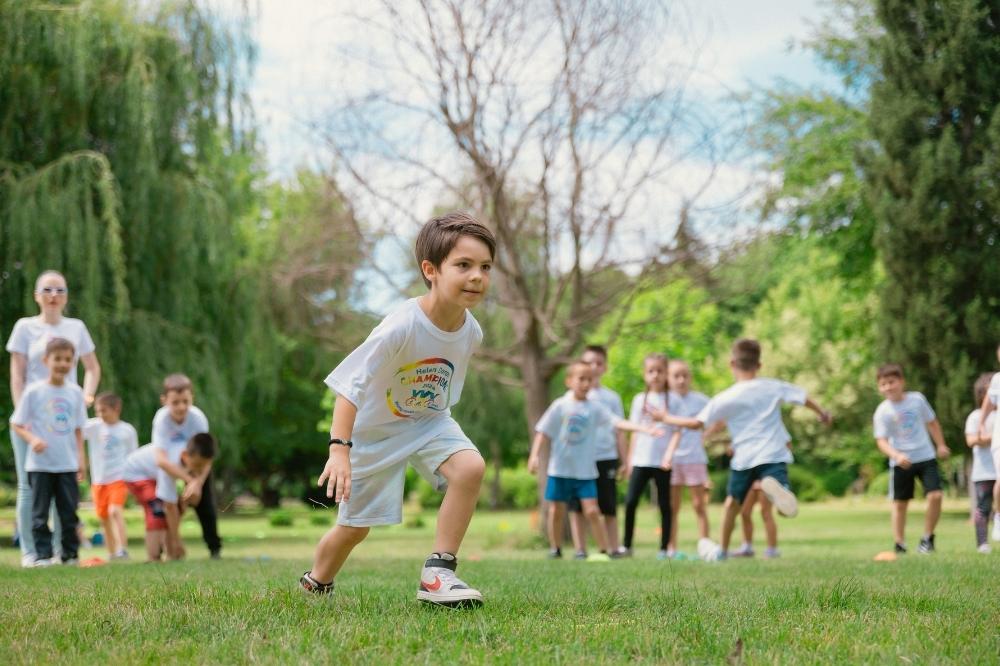
Shared physical movement offers a fast on-ramp to group cohesion. When kids run a relay or navigate a cooperative obstacle course, their self-consciousness drops because their focus remains entirely on the physical task, so a child who normally hesitates during unstructured free time will often jump right into chain tag.
While the importance of unstructured play is well documented for fostering creativity and independence, pairing it with guided team movement gives children the best of both worlds: freedom to explore alongside a clear sense of belonging to something bigger. Participating in these active environments directly lowers social anxiety while improving overall self-esteem.
The specific activity matters far less than ensuring nobody watches from the sideline. Relay races with mixed-ability groupings and cooperative challenges like group balance boards keep every player engaged, which means mixing ability levels prevents the activity from sorting children into winners and spectators before the starting whistle. Five minutes of shared physical effort changes the social temperature of a room faster than any traditional icebreaker.
| Key Insight: Shared physical movement is a more effective social bonding tool for children than any designed conversational icebreaker, as it shifts focus away from the self and onto an external task. |
2. Assign Encouraging Roles and Celebrate Effort
Every child needs a concrete reason to show up. Assigning specific jobs, such as timekeeper, equipment organizer, or score recorder, transforms passive attendance into active membership, since holding helping roles ensures they feel their contributions matter to the larger group. These practical school spirit ideas build investment in the shared experience rather than just individual performance.
Roles must rotate so no child becomes fixed in a single identity. The quietest kid deserves a turn leading the countdown, while the most energetic participant should spend a round in the encourager seat, because building confidence in kids happens through repeated moments of being seen doing something right. Adults accelerate this process by naming the specific helpful behavior they observe instead of just praising the final score.
Leaders must model peer encouragement before expecting children to produce it. When a coach narrates a generous action out loud, children begin to mirror both the language and the habit. Structuring participation this way ensures that choosing to engage feels easier than stepping away.
3. Take It Outside

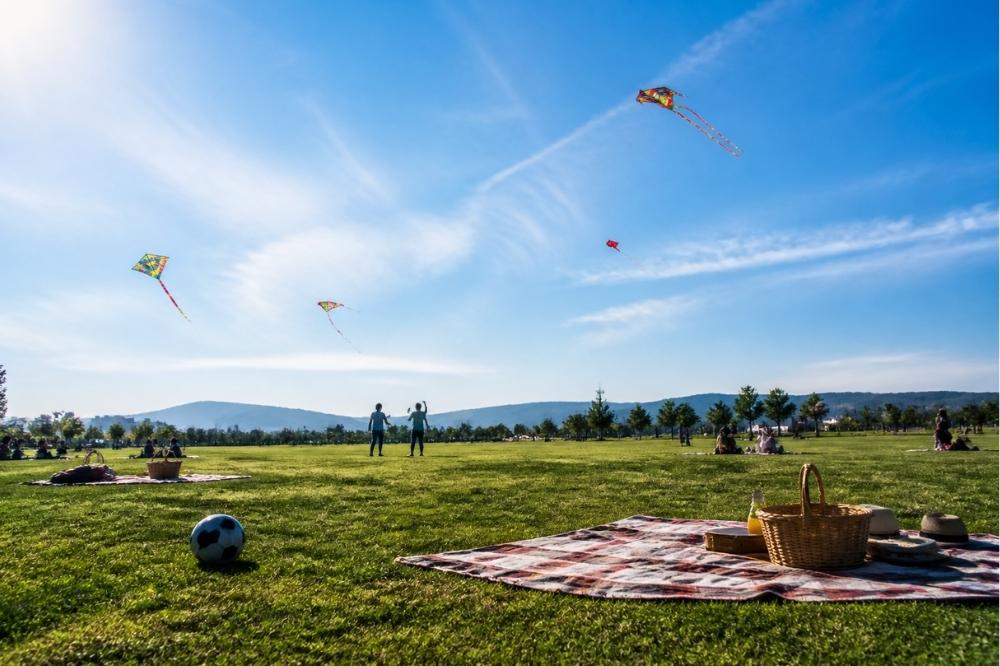
Stepping out of the gymnasium removes the physical boundaries that often make children defensive. The open air lowers social guards and raises peer openness naturally. Kids who hold back inside a crowded school hallway often move differently once they reach a grass field with fifty feet of space in every direction.
Outdoor activities for children require minimal elaborate planning. Team scavenger hunts across school grounds or neighborhood sports days at a local park create side-by-side peer interaction that indoor settings frequently suppress. These formats expand the circle naturally by removing formal seating arrangements.
When families gather at the edge of a park-based pep rally, community engagement for families grows organically. Parents and siblings become active participants rather than observers waiting for the event to finish.
4. Give the Group a Shared Visual Identity
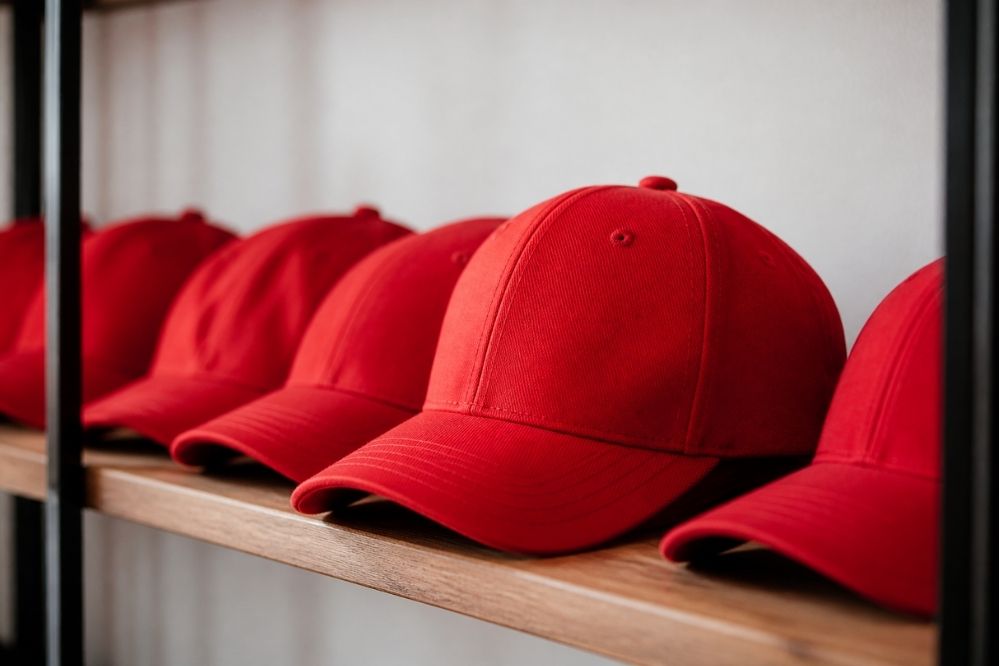
When children look like a team, they begin to act like one. Coordinated appearance creates an immediate, visible signal that participants understand without needing an explanation, which means this effect extends well beyond competitive sports into school spirit squads, field day color teams, and community event groups. Visible unity reinforces itself, as a child wearing the same colors as twelve teammates carries that membership signal throughout the entire event.
Organizers do not need a massive budget to create this unified effect, since matching T-shirt colors, color-coded pinnies, or coordinated bandanas achieve the same psychological milestone at minimal cost.
For groups preparing for more structured appearances, such as school assemblies or community performances, coordinated apparel raises that effect significantly. Custom uniform providers offer flexible ordering so every member of the squad shows up feeling like an equal part of the same team.
The goal involves giving each child a visible reason to feel included before the activity begins. The coordinated item serves as the mechanism.
| Important: The psychological signal of belonging comes from a shared visual element, not from its cost. A simple matching bandana achieves the same core goal as a custom uniform. |
The Path Forward
Each strategy rests on a single foundation: children connect when adults intentionally design inclusive experiences. None of these approaches demand perfect planning or endless resources. They simply require a repeatable structure that organizers bring to every single gathering.
Rotating peer roles and genuine encouragement start building confidence across any group setting immediately. Coordinated apparel, whether matching bandanas or specialized performance uniforms, signals membership before a child speaks a single word to a teammate. One well-placed decision about how a group moves or what they wear often determines whether a quiet child leans in or stays on the edge.
| Author Profile: Sports Gear Swag is the leading online retailer of custom sports apparel and gear for teams, schools, and organizations of all sizes. Specializing in team jerseys, uniforms, and athletic apparel with a wide range of customization options. |
