
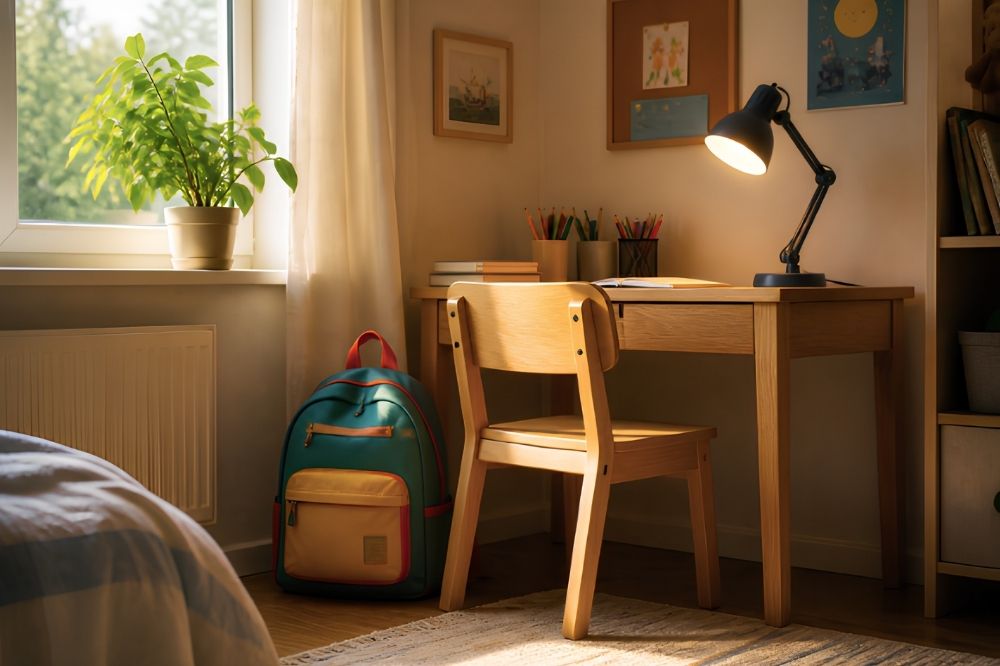
The fastest way to reduce homework friction is to give your child a dedicated, consistent spot for schoolwork, separate from high-traffic areas, away from the TV, and set up with their supplies already within reach.
Most families default to the kitchen table or the couch, not by choice, but because a proper homework space for kids never got built. The good news is that an effective at-home learning setup doesn’t require a separate room or a big budget, just a few intentional decisions made once that pay off every single afternoon.
1. Choose a Spot That Belongs to Them
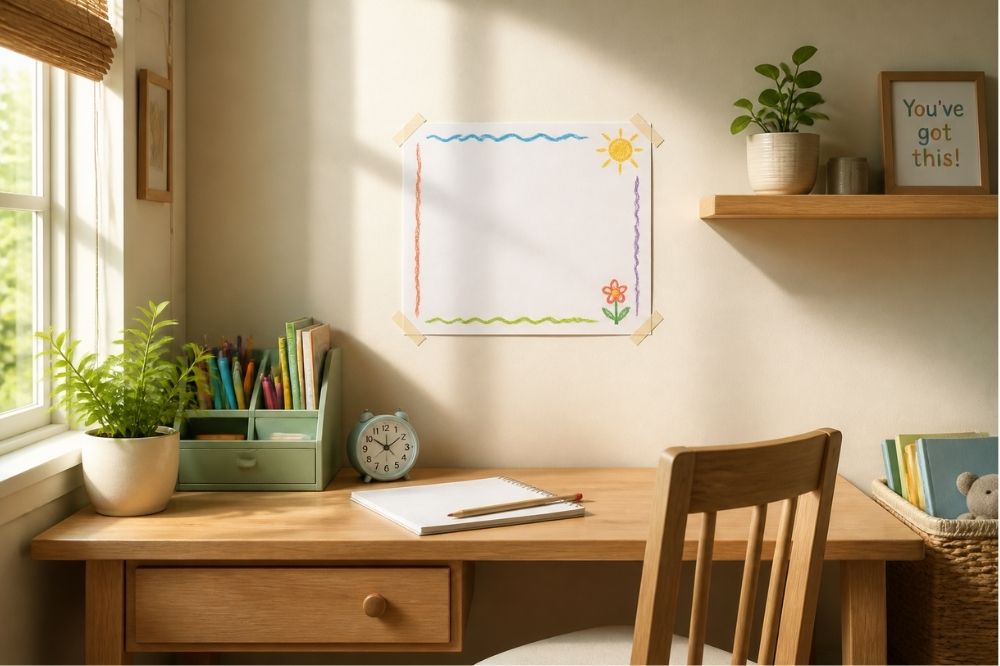
A homework space does not require a dedicated room. A quiet bedroom corner or a window nook functions perfectly well. The spot simply needs low foot traffic, no television sightlines, and consistent daily use.
The chair must allow your child to sit without slouching, while natural light reduces eye strain. Children with a predictable study area settle in faster because the familiar location removes the mental friction of deciding where to go when it is time to work.
| Key Insight: Kids with a predictable study area settle in faster and push back less. The predictable environment removes the mental friction of deciding what comes next, building an automatic transition without a fight. |
2. Organize the Space So It Works for Them

Clutter competes for a child’s attention before they even open a book. Keep homework organization simple by placing pencils and rulers within arm’s reach so students never have to leave the chair. When a child has to walk across the house to find a highlighter, the momentum of the work session breaks entirely.
Many families anchor the desk with Custom Envy’s custom neoprene desk mat to visually define the work zone. This functional detail protects the surface while letting the student display a favorite color right where they sit every afternoon. A child who feels ownership over this specific physical setup will sit down at the desk much more willingly.
| Pro Tip: One personal item chosen by your child shifts the dynamic from “a table where I do homework” to “my spot.” This single detail is enough to change their entire relationship with the space. |
3. Set Smart Tech Boundaries
When students use the same tablet for gaming and studying, the temptation to switch tabs usually overpowers their focus. Selecting a budget-conscious choice like a certified refurbished Dell laptop from PCLiquidations gives students a reliable machine dedicated entirely to assignments. This physical separation prevents schoolwork from bleeding into family entertainment time on a shared electronic device.
Three specific boundaries help maintain focus on these computers. Parents should utilize application blockers like Google Family Link during study hours to prevent browsing unrelated sites. Keep gaming consoles physically out of the room entirely, rather than just turning them off.
Set a strict no-notifications rule so social alerts never interrupt a math problem. The computer must live exclusively in the designated study spot rather than migrating to the living room couch or charging next to the bed at night.
4. Build a Routine That Makes Homework Feel Normal

When assignments happen at the same time and place every afternoon, the process stops registering as a punishment. It simply becomes part of how the day works, similar to brushing teeth before bed or setting the table for dinner.
School routine tips consistently point to this exact mechanism because repetition removes the need for daily negotiation. The student knows exactly what to expect when they walk through the front door, leaving no room for arguments about when the work should start.
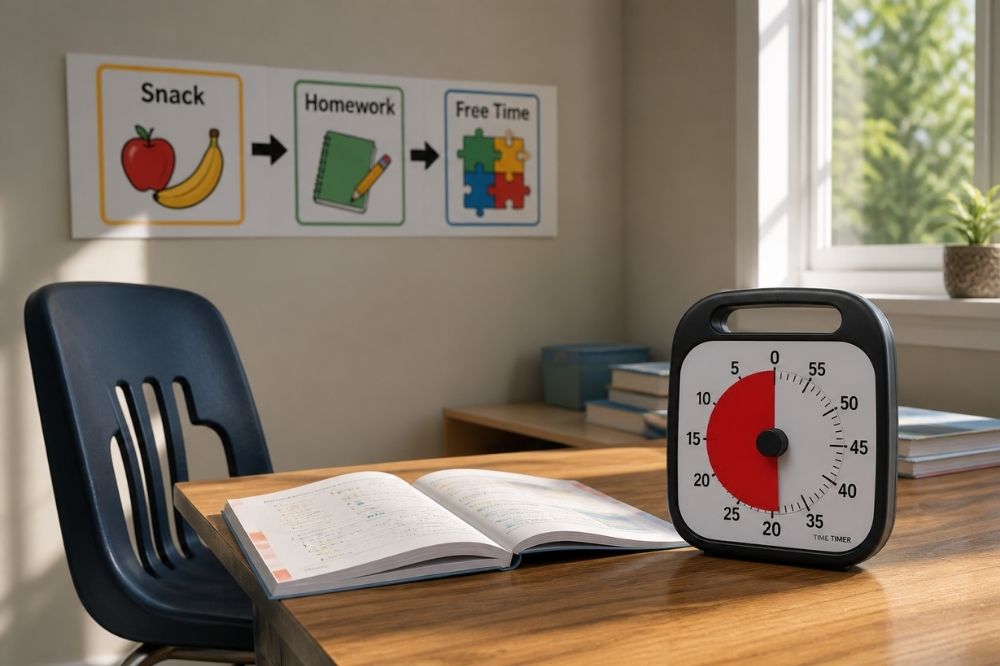
Give your child a short wind-down period after school to help them mentally shift out of classroom mode. A quick snack, ten minutes of outdoor play, or a brief walk provides a necessary reset before returning to academics.
Following this break, homework should start within thirty minutes of arriving home, well before television screens and open-ended free time become an option. Using a physical kitchen timer for the focused work block gives the student a concrete visual countdown.
This tangible endpoint significantly reduces frequent questions about how much longer the work will take. The most effective tactic for generating buy-in involves the child in setting the actual schedule.
Kids who help decide when the timer begins are measurably more likely to follow the routine without resistance. Close every session with a clear signal the student knows in advance, proving that the endpoint serves as a reward rather than an arbitrary cutoff.
| Key Insight: Kids who help decide when homework happens and how the timer is set are measurably more likely to follow the routine without resistance, because they made part of the decision themselves. |
The Path Forward
Parents do not need to implement all four of these methods at once. Pick one specific change to make this week, whether that involves clearing the supplies out of the living room or organizing the desktop.
Commit to this single adjustment for five school days before adding anything else. Let your student make at least one decision about the physical setup, such as where the pencil cup goes or what colors they want to feature, so they feel direct ownership over the space.
A refurbished study laptop handles the digital requirements, while a clear schedule manages daily time constraints. Adding a custom protective desk mat and organized supplies ensures the physical workspace feels theirs entirely. Set the daily schedule before buying supplies or moving furniture, because the physical space only functions well when the timing remains identical every afternoon.
