
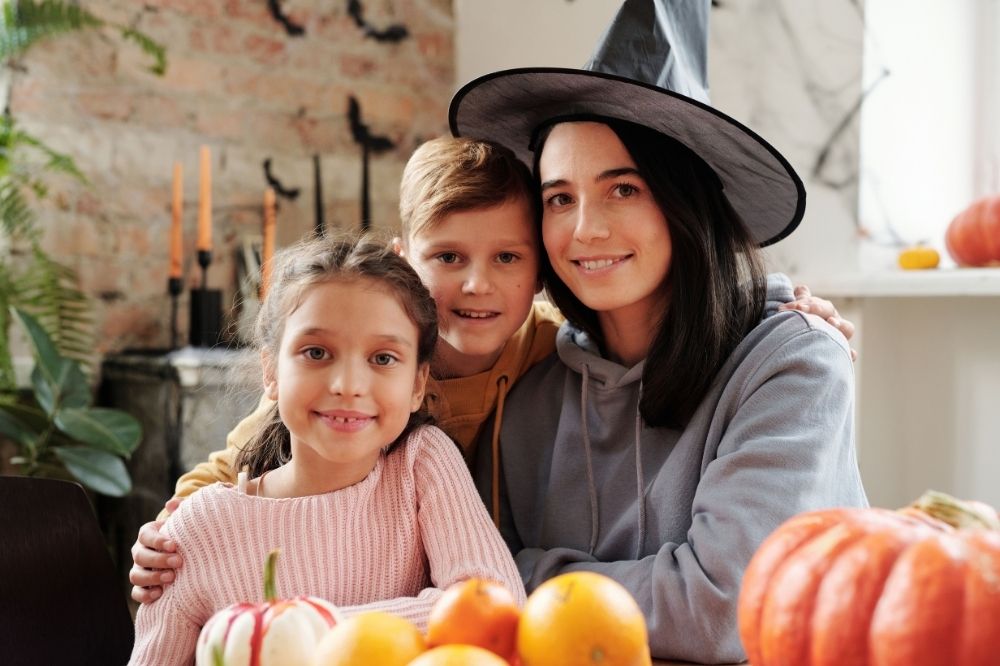
Halloween is one of the few moments in the year when kids are already motivated to dress up, tell stories, and transform their surroundings. This seasonal energy makes it a natural vehicle for building real skills like self-expression, collaborative decision-making, and narrative thinking.
These family Halloween ideas require no elaborate budget, just a little intention. Whether your kids go all-in on a theme or simply love the atmosphere, these four Halloween activities for kids are designed to make the whole season feel more creative and fun.
1. Choose a Halloween Theme Together
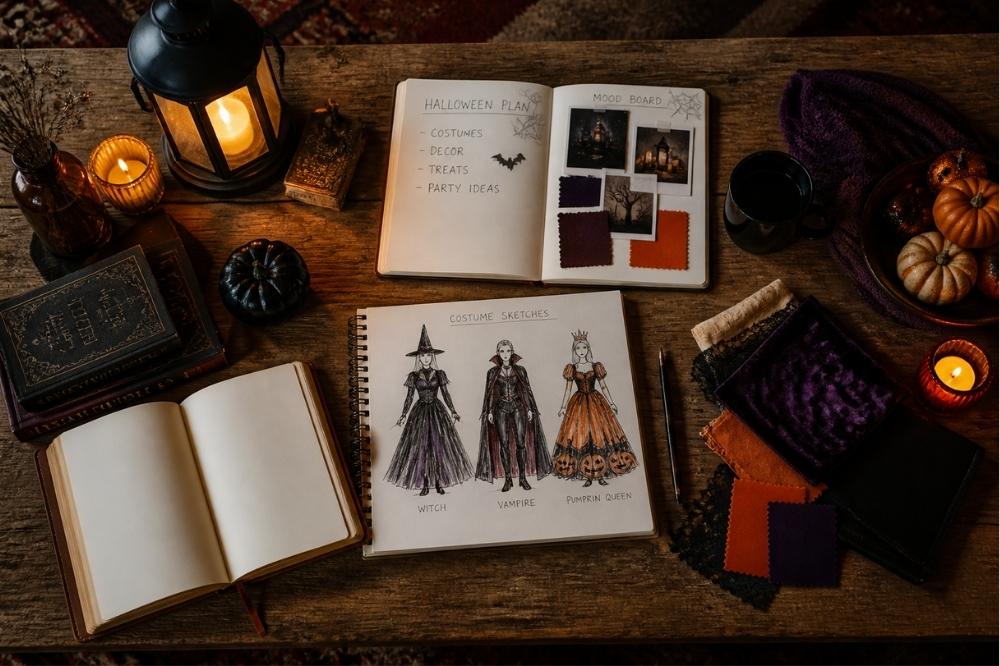
When kids have a say in the family’s Halloween direction, their investment in the seasonal activities increases noticeably. Start the conversation two to three weeks early and present a short list of concrete options, such as a haunted forest, pirate crew, or fairy tale villains. A broad concept like an enchanted kingdom gives every family member a creative framework without enforcing rigid rules.
This same theme-selection approach works equally well when your child needs a costume concept for a Halloween class party, since arriving with a thought-out character rooted in a larger narrative helps them stand out and feel confident among their peers.
Older kids and teens often respond to historically grounded figures like knights, sorcerers, and Viking explorers since these roles support complex backstory building. Sourcing foundational gear anchors these creative costume ideas quickly.
Options like Medieval Collectibles’ knight armor for cosplay offer vivid inspiration for anyone ready to fully commit to a realistic historical look. Pairing structured metalwork with a basic linen tunic lets siblings occupy the exact same universe while maintaining distinct identities.
2. Decorate the Entryway as a Family Project
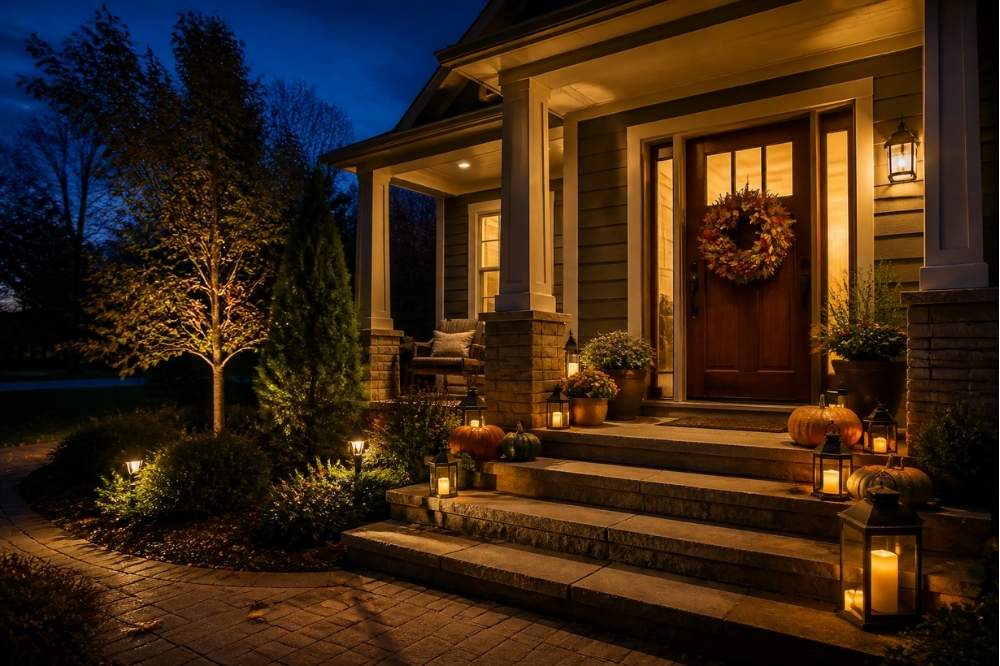
Halloween decorating with kids operates smoothly when every person takes ownership of a defined role. Younger children can safely arrange smaller ground-level items like pumpkins, gourds, and lightweight tabletop accents.
Teens can take the lead on aesthetic decisions by choosing color schemes and deciding the exact placement of larger props. Adults can handle any tasks requiring tools, ladders, or structural securing to the exterior door frame.
The most impactful exterior displays combine door hangers and seasonal signs for vertical height. Layering in battery-powered lighting creates a low-light ground atmosphere. Adding thick green wreaths provides welcoming texture, while small thematic accents tie the final visual directly back to your chosen family theme.
Sourcing ready-made pieces in advance prevents last-minute supply runs and protects your scheduled decorating time. High-quality focal points anchor a front porch display without requiring a stressful, messy craft session.
Families can utilize specialty home decor shops and sources like Michelle’s aDOORable Creations’ handmade Halloween decorations to establish a professional look immediately. These ready-to-display pieces, including seasonal door hangers and festive wreaths, set a welcoming scene before you even carve the first pumpkin.
3. Create a Spooky Reading Night
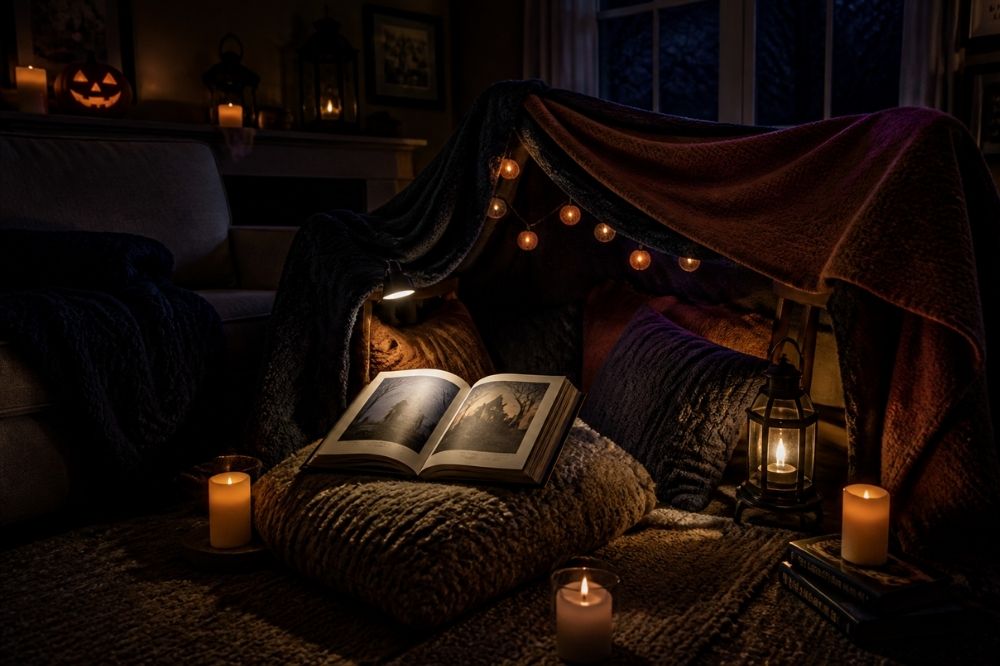
A dedicated reading night serves as a screen-free Halloween activity for kids that takes an hour and utilizes items you already own. Dim the overhead lights, set out battery-powered candles, and pile blankets on the living room floor. Selecting age-appropriate books that match a spooky or fantastical mood anchors the entire evening.
Tailor the reading material to specific developmental stages to keep everyone engaged. Children under seven generally prefer friendly monster picture books and highly illustrated fairy tales.
Preteens often gravitate toward classic folklore collections or adventure tales, while older teens tend to choose gothic short stories and mythology anthologies. Parents can easily lean on short, image-heavy formats for younger crowds to maintain momentum without feeling pressured to perform long narrations.
Reading regional folklore or fantasy tales primes kids to invent their own characters and narrative arcs. This exposure feeds directly into the backstory exercises they will use during trick-or-treating later in the week. By establishing a narrative foundation early, families make the transition into full costume play feel organic.
| Pro Tip: Battery-operated candles and a blanket fort transform ordinary story time into an immersive Halloween ritual. The atmosphere primes kids’ imaginations for creative play. |
4. Encourage Kids to Invent Character Backstories for Trick-or-Treating
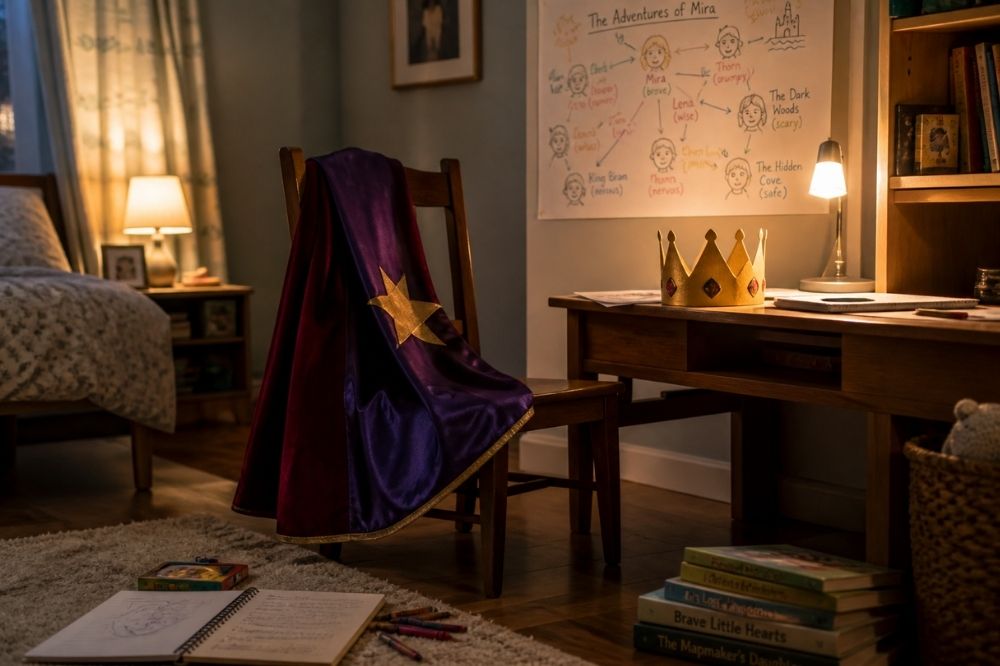
Character backstory invention serves as a focused Halloween pretend play activity that pushes the costume experience into genuine narrative play. Start the week before the holiday by asking your child specific world-building questions.
Asking where their character lives, what specific skills they possess, and what local quest they are pursuing tonight provides immediate structure. These targeted prompts give reluctant storytellers a safe framework to operate within instead of facing the pressure of an open-ended performance.
Inventing a detailed personal history builds narrative thinking and expands a child’s vocabulary through the specific terminology of their chosen era. Extensive pretend play improves cognitive abilities like language development and perspective taking, turning a simple walk around the block into a valuable educational exercise.
Practicing these in-character answers treats the actual trick-or-treating route as a low-stakes live performance. This rehearsal strategy noticeably reduces social anxiety for shyer participants before they interact with a neighborhood full of strangers.
Character-driven outfits like knights, sorcerers, and fairy tale heroes naturally demand deeper backstories than generic, store-bought concepts. Linking their personal backstory directly to the family’s broader medieval or storybook theme reinforces the collaborative dynamic established at the start of the month. Relying on conversational prompts rather than a memorized script ensures the activity remains playful rather than feeling like homework.
| Key Insight: Asking “What quest are you on tonight?” turns trick-or-treating into narrative play, boosting empathy, vocabulary, and easing social anxiety for shy kids. |
The Path Forward
Implementing just one or two targeted strategies shifts the focus from passive consumption to active participation. Combining a unified fantasy costume theme with authentic medieval armor elements encourages children to engage deeply with narrative roleplay.
Meanwhile, establishing a designated reading night or anchoring the front porch with high-quality handmade decorations guarantees the household feels festive without demanding exhaustive DIY efforts.
