

If your mornings involve one kid missing a shoe, another still in pajamas at 7:45, and a backpack that has somehow ended up in the garage, you are not alone, and stress-free mornings with kids are closer than they look. Here are three effective ways to get there. These methods prioritize simplicity over perfection.
Three small changes (creating a physical landing spot, shifting prep to the night before, and carving out five quiet minutes for yourself) can turn a chaotic school morning into something that mostly runs on its own. None of them require a new schedule, a color-coded binder, or waking up at 5 a.m. They are a morning routine for families that actually fits how real households operate, which is imperfectly and at speed.
1. Create One Cozy Spot Where Everyone Lands

Scattered mornings usually share one common problem, because there is no single place where the family gathers before the day pulls everyone in different directions. Kids wander to their rooms while parents chase them down the hall, so no one is actually ready at the same time. A dedicated landing spot gives your daily parenting routines a physical anchor.
Before the kids wake up, this same spot can serve as a personal retreat for parents. Sitting in a quiet room with a warm drink provides a crucial psychological buffer against the impending rush. Brewing a rich cup of Bones Coffee Company’s flavored decaf coffee offers a comforting ritual without the early jitters. Once the household wakes, this area transitions into the place where shoes get tied, and the family sits together.
The physical space itself dictates whether people actually want to gather there. An inviting seat makes kids stop retreating to separate corners of the house. Home Reserve’s cozy deep seat sectional offers generous room where the whole crew can settle in for a quiet read or quick chat.
| Key Insight: Calm mornings often hinge on a low-effort, high-return connection ritual, like a five-minute screen-free window, that shifts the emotional tone of the entire day. |
2. Do Tomorrow’s Morning Tonight
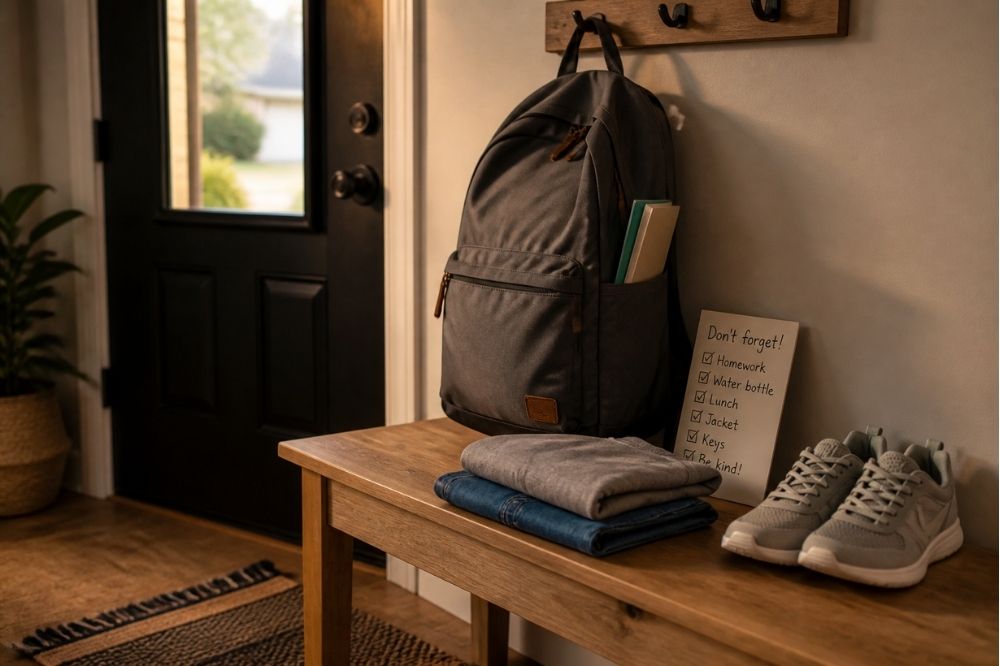
Moving the prep work to the evening before remains the most effective strategy for calm school mornings. The stakes are much lower at night, meaning no one feels rushed or pressured to find missing items. Taking ten minutes at 8 p.m. easily erases thirty minutes of early friction, directly reducing overall household disorder. Research indicates that preschoolers living in high-chaos households sleep significantly less per night, while also facing increased screen time and lower physical activity.
Start the evening routine by packing backpacks with homework, permission slips, and filled water bottles. The bag then goes to a designated drop zone near the front door, eliminating the frantic last-minute scramble through the kitchen. Laying out the next day’s clothes becomes the child’s job, which builds personal independence while removing a common negotiation entirely. A child who physically selects their own outfit before going to bed rarely argues about wearing those same items the following day.
Simple family organization tips like these prevent anyone from standing in front of an open fridge unable to choose, since decision fatigue affects younger kids just as heavily. Simplify breakfast decisions by rotating through reliable options like cereal, toast, or yogurt.
For toddlers and preschoolers, a laminated visual checklist at their eye level works well as a kids’ morning routine tool they can manage themselves. These simple morning and evening reminders let children check off pictures of shoes, jackets, and packed bags, building confidence and cutting the number of times a parent has to ask about forgotten items to approximately zero.
3. Give Yourself A Five-Minute Head Start

Parents who wake up even five minutes before their children often report much smoother routines across the board. The pressure of daily household management runs high, as 41% of parents state they feel so stressed on most days that they cannot function. Another 48% report their daily stress is completely overwhelming, compared to just 26% of other adults. Beginning the morning from a grounded place provides a crucial psychological defense against this baseline burnout.
Anchoring this window with a physical habit creates a clear boundary before the daily rush begins. Holding a warm mug of tea or water signals that this specific moment belongs entirely to you. Other achievable options include taking three slow deep breaths, thinking about the day ahead, or playing soft background music kept low enough to let the kids sleep.
Your personal headspace directly influences the emotional temperature for everyone else in the house. A parent who feels centered handles spilled milk or missing homework with patience rather than frustration.
Putting It All Together
Creating a comfortable modular seating area gives everyone a physical place to connect, while preparing a flavorful decaf coffee provides a personal anchor before the rush. Pairing these environmental changes with night-before prep habits makes the early hours nearly automatic.
Start by packing a single backpack and choosing your designated family gathering spot tonight. Setting out clothes and planning breakfast options right now removes the heaviest mental friction from tomorrow’s schedule.
