
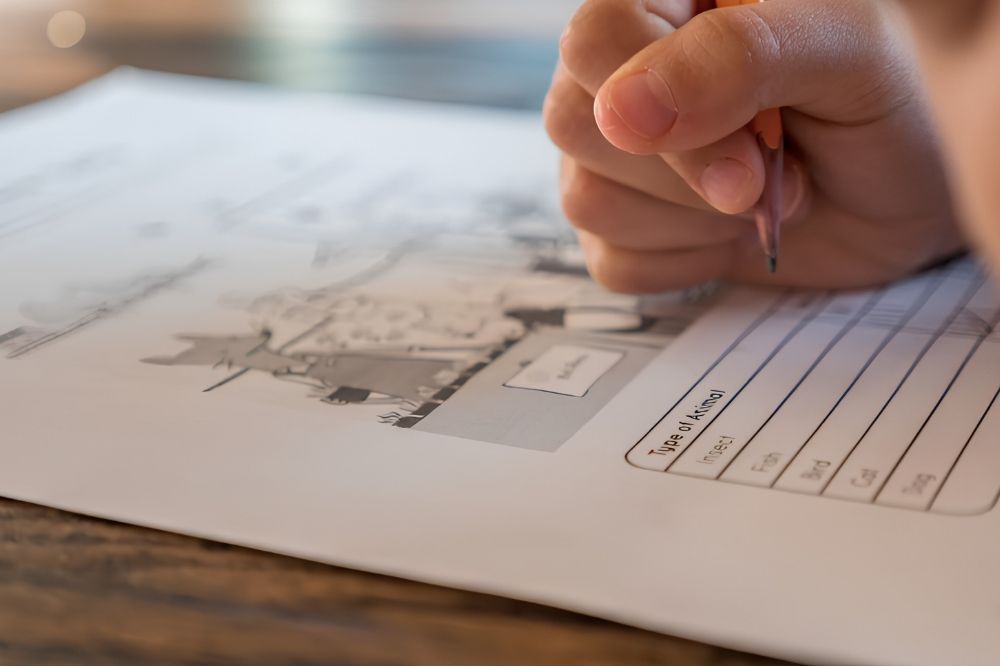
Want a home learning space that actually helps children work?
A typical homeschool begins at the kitchen table. It works…. for one glorious week. And then the crumbs, wobbly dining room chairs and pile of laundry start fighting for attention.
Here’s the good news:
Creating an effective homeschool environment takes nothing at all from square footage or big budgets. It comes down to making a few simple choices – and choosing the right seat is number one on that list.
What’s inside:
- Why The Homeschool Space Matters More Than People Think
- Choosing Seating That Supports Real Work
- Setting Up Zones For Different Subjects
- Light, Noise And Storage Sorted Properly
- Keeping The Space Working Long Term
Why The Homeschool Space Matters More Than People Think
Home education is no longer a fringe choice.
Statistics from the Department for Education reveal that there were 126,000 children in England being electively home educated at the time of the autumn 2025 census. The number rises even further if you account for the whole year, with 175,900 children home educated at some point during 2024/25.
That’s a lot of dining rooms having to serve a purpose they weren’t intended to serve.
And that right there is the issue. The classroom should be built around the lesson taking place. A living room is centered around a sofa and tv. When the room opposes the lesson, the lesson tends to fail.
Choosing Seating That Supports Real Work
Seating is the biggest upgrade most home educators can make.
Why? Kids sit for hours. When their seat is too low, too soft or too far from the work surface they slump, fidget and tune out way before the lesson is over. School lab stools, task chairs and ergonomic classroom seating are designed for exactly that – extended periods of concentrated work at an appropriate height.
School lab stools are taller than an average dining chair. This makes them perfect for height of a kitchen worktop, workbench or height adjusted desk. So before you furnish your educational settings, measure the height of desks your child will actually be working at. Get that measurement wrong and even the best stools will become uncomfortable after only 20 minutes.
What To Look For In School Lab Stools
Not all stools are worth their price. However, stools that tend to last usually have these things in common:
- Adjustable height so the same stool works at eight and at fourteen
- A wipe-clean seat for paint, glue and the occasional spillage
- A footrest ring so legs are supported rather than dangling
- Non-marking feet that protect kitchen and wooden floors
- A wide, stable base because children lean, swivel and rock
Height adjustment is king. Kids grow quickly and change shape, a stool that can’t keep up with them will be handed down after two years.
Match The Seat To The Task
Different tasks require different chairs. That’s one of the biggest problems in home offices.
Reading and sedate study should be done in a chair at standard desk height. Hands-on learning — science experiments, art projects, model building, anything messy — belong at a standing-height table on school lab stools, because getting up and down repeatedly is much easier from a stool than a low chair.
Buying all of one kind of seat is the mistake. Two chairs and a couple stools will work more effectively for a homeschooling family than four matching chairs ever could.
Setting Up Zones For Different Subjects
Zoning is the closest thing home education has to a magic trick.
Schools understand this on a subconscious level. You never see someone examining an owl pellet at their desk in the library. Switching locations signals to your brain what type of work you will be doing and kids react to that cue without it being verbally communicated.
A simple three-zone setup covers almost everything:
- A study zone – a place where you have your desk, comfortable chair, not much clutter, where you do any written work or independent study
- A practical zone – a wipe-clean surface with stools, used for science, art and anything hands-on
- A soft zone – a beanbag, a rug or an armchair, for reading and discussion
They don’t have to be in separate rooms. A corner of the dining room and a strip of worktop is enough. It’s just that each zone should look and feel unique.
Oh, and there’s another advantage to this… When your day at school is over the equipment goes back in it’s place and the house returns to being a house. That boundary works for your entire family, not just your child.
Light, Noise And Storage Sorted Properly
Get The Light Right
Rule #1 – Natural light is ALWAYS better, so situate your focus area next to a window when possible.
If it doesn’t match, use a task lamp directed at the work surface instead of one ceiling light. Ceiling lights cast shadows on a page and shadows cause children to lean forward, pulling posture out of alignment in minutes.
Control The Noise
Homeschooling rarely happens in silence. Washing machines run, siblings play, deliveries arrive.
Cheap fixes can have a big impact. Carpets and curtains can muffle noise. Closing the door makes a bigger difference than you think. And headphones can be a useful tool for teens doing assignments.
Storage That Stops The Drift
Every homeschooling family is familiar with this scene. Crayons, notebooks, calculators, and half-completed crafts slowly migrate until organization no longer exists on Monday morning.
Storage fixes it, provided the storage is close to the work:
- Trolleys or caddies that move between zones
- Labeled boxes for each subject
- A shelf within arm’s reach of the desk
- One dedicated drawer for equipment that must not wander
Five minutes spent cleaning up at night saves ten minutes of frantic searching in the morning.

Keeping The Space Working Long Term
A homeschool room is never complete. Kids grow and subjects change. What works for a seven-year-old will irritate a thirteen-year-old.
Audit it annually. Measure desk heights against chair heights. Audit if an area has quietly become a junk zone. Audit if the room still suits the curriculum – a GCSE science class will have far more need for practical surface area than a Key Stage 2 class.
Small adjustments, made regularly, prevent the slow slide back towards the crumb-covered kitchen table.
Bringing It All Together
A productive homeschooling environment is built from a few unglamorous decisions:
- Seating that matches the work and the surface height
- Zones that signal what kind of learning is happening
- Light aimed at the page rather than the ceiling
- Storage that keeps equipment where it is used
- A termly review so the space grows with the child
None of it needs to be expensive or complicated. You don’t need a spare room or a specific budget. It just means approaching their workspace as you would their education- as something important. A kid who isn’t distracted or uncomfortable will always accomplish more than one sitting on a dinner chair with the TV humming in the background.
Start with the seating. Everything else gets easier from there.
