
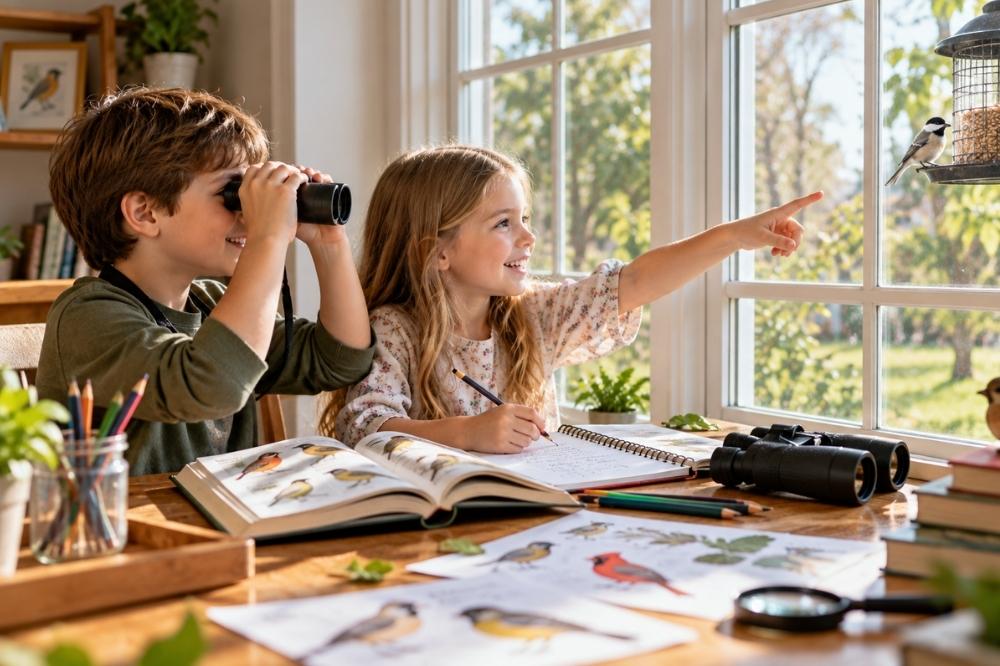
Windows are natural bridges between the comfort of indoor spaces and the dynamic physical world out of doors. For young students, a simple windowpane can be an interactive laboratory for the core concepts of physics, meteorology and biology without the need for complex specialized equipment. Parents and teachers are able to guide children in hands-on science activities right in the living room, using the natural light, temperature changes and precipitation that happen every day.
Thermal Dynamics and Insulation Investigations
To understand how light and heat pass through glass is a useful introduction to physical science. Children can investigate thermal energy by testing how different materials reflect or absorb sunlight through a window pane.
Ever notice some windows get fogged up more? depends on the insulation. Double and triple pane glass traps the air between the layers, which is why a window company in Canada will often recommend them for cold winters. Here’s an idea: On a cold morning, have the kids touch various windows in your house and see if they can guess which ones are trapping more heat. To take this experiment further and understand how modern home design combines energy efficiency with daylighting, families can use a replacement windows estimator to learn about structural glass features.
Hands-On Solar and Weather Activities
Kids could watch the changing conditions of the environment day by day, thanks to interactive visuals mounted directly on glass.
Experiments on Condensation
Create a mini-greenhouse on the window for kids to see the water cycle in real time. Tape a damp paper towel with a few beans inside a clear plastic bag onto a window that gets sun. Over a number of days, children can watch the water evaporate, condense on the top of the bag and nurture the sprouting seeds.
Solar Power and Sun Prints
Children can use light-sensitive cyanotype paper or regular construction paper and place flat objects like leaves, buttons or stencils against the glass. Within hours the ultraviolet rays of the sun will fade the exposed paper, leaving sharp dark silhouettes behind to show the power of solar radiation.
Weather Charts – Cling to Windows
Turn everyday observations into an interactive meteorological station. Kids can use reusable static-cling vinyl shapes to make cloud formations, record temperature trends, and chart rain or snow conditions on the glass surface each morning.
Optics and Rainbow Prisms
If you place a crystal prism or glass suncatcher in direct sunlight it will divide the incoming white light into its component wavelengths. The children can follow the spectrum around the room, seeing how light bends as it passes through transparent objects of different densities.
Seeing Life and Optics Beyond the Glass
Windows are a comfortable, stationary platform for studying ecosystems, optics, and atmospheric changes without disturbing natural habitats.
Bird Watching and Avian Science
By attaching a suction-cup bird feeder right to the outside of a window pane, you create a close-up wildlife observation station. Kids can keep a field journal to record different species, note beak shapes, and observe behavior patterns as birds visit throughout the seasons.
Shadow Tracking and Planetary Motion
Tape a small object or figurine to the window sill. Every so often throughout the day trace the shadow of the object on the glass or on the floor with dry-erase markers. This simple visual log shows the rotation of the Earth and the change in the angles of the sun.
Frost Pattern Studies
On cold winter days, kids can look at the complex crystalline structures of window frost with a magnifying glass. This activity demonstrates how water vapor can directly form ice crystals on a cold surface.
Cloud Type Classification
Kids can trace basic cloud shapes—cumulus, stratus and cirrus—on the glass with washable markers, giving them an instant template to hold up against the sky for on-the-spot weather identification.
Plant Phototropism Tracking
Place a small potted plant near the window and mark the glass to indicate the direction of its leaves. Children can turn the pot every few days to see how the plant stems bend slowly toward the light source.
