
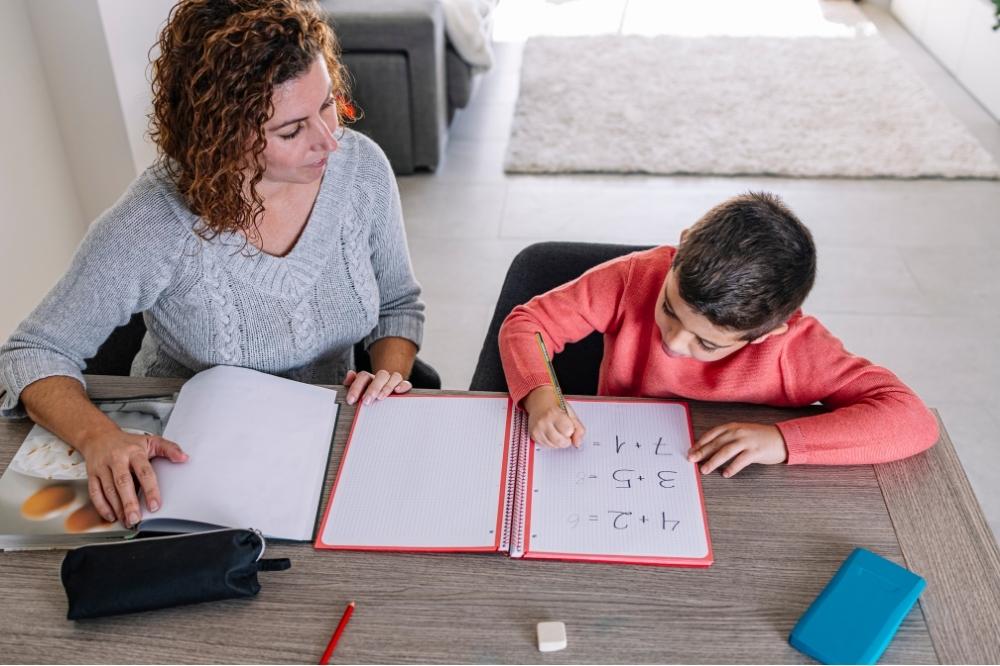
The problem with a lack of confidence in children regarding their skills in mathematics is not only because of difficult coursework, but because of fear of failure, constant comparisons with other students, and pressure from parents to score well in tests. Nevertheless, even though they require assistance, the wrong approach by parents will complicate matters.
Families looking for extra academic support can find a math tutor in your city using online sources or a tutoring program. A tutoring program helps match between tutor and student with the same learning style.
1. Celebrate Small Successes, Not Just Perfect Grades
Rather than waiting for good grades, appreciate efforts made by a child in solving hard problems on his own or doing homework without much assistance.
The American Psychological Association says that a child who is praised for efforts rather than his inherent talent becomes resilient against academic challenges.
Parents should remember to:
- Focus on praising hard work rather than just grades.
- Don’t compare the improvement to other children.
- Enjoy every bit of progress after each practice.
2. Create Short Math Practice Sessions at Home
Improvement in confidence is not achieved by long hours of practice for a child. Practice for a shorter period of 15 to 20 minutes helps consolidate ideas without developing frustration. Simple tasks that one engages in daily life, such as shopping or cooking, offer practice for mathematics.
| Everyday Activity | Math Skill Developed | A Parent’s Contribution |
| Grocery shopping | Addition and estimation | Ask the child to estimate the total cost. |
| Cooking meals | Fractions and measurements | Let the child measure ingredients independently. |
| Board games | Mental math and strategy | Encourage children to explain their answers. |
| Planning a trip | Time and distance | Calculate travel time together. |
Parents can avoid unnecessary pressure by:
- Keeping practice sessions short and enjoyable.
- Allowing breaks when frustration appears.
- Choosing activities that match the child’s current ability.
3. Treat Mistakes as Learning Opportunities
Errors are a good source of information on children’s thought processes. Rather than correcting children’s answers right away, it is important to encourage them to explain their thoughts and find out from what point they got confused. This way you can develop problem-solving skills without the fear of getting an answer wrong.
OECD Program for International Student Assessment (PISA) shows that children who have higher self-confidence in math have better mathematics performance compared to less confident children.
Parents can support healthy learning by:
- Asking questions before providing solutions.
- Staying calm when incorrect answers appear.
- Showing that mistakes are a normal part of learning.
4. Connect Math to Everyday Life
The desire to learn the subject is enhanced if a child realizes the application of mathematics beyond the classroom. For example, the application of mathematics in activities such as discounting items in stores, cooking, handling pocket money, and time calculations helps in making the subject easy to learn.
In addition, the application of mathematics in daily decision-making gives a child an idea of the subject’s usefulness.
Parents can encourage practical learning by:
- Using real-life examples during daily routines.
- Allowing children to solve simple calculations independently.
- Encouraging curiosity instead of expecting perfect answers.
5. Choose Personalized Support When Confidence Starts to Drop
Nevertheless, there are cases where children would need more attention despite receiving adequate attention at home. This is indicated by a dislike of homework, fear of math classes, and lack of persistence in work. Individualized instruction will assist in solving learning gaps in early stages before frustration sets in.
You can find a math tutor in your city to provide you with personalized instruction according to your kids’ abilities and educational needs.

Parents can make better support decisions by:
- Looking for signs of declining confidence early.
- Presenting tutoring as encouragement rather than punishment.
- Choosing personalized instruction that fits the child’s learning pace.
One gains confidence in mathematics from patience, encouragement, and reasonable expectations, not from pressure. Success and positive discussions build the confidence to face challenges. When parents combine this approach with individualized coaching as necessary, children can have the knowledge and confidence to be successful at math.
